Tiss City Hall competition
Design team :
Ali Jafari
Raziye Zirrahi
Ashkan Akbari
visualization : Niki Attar
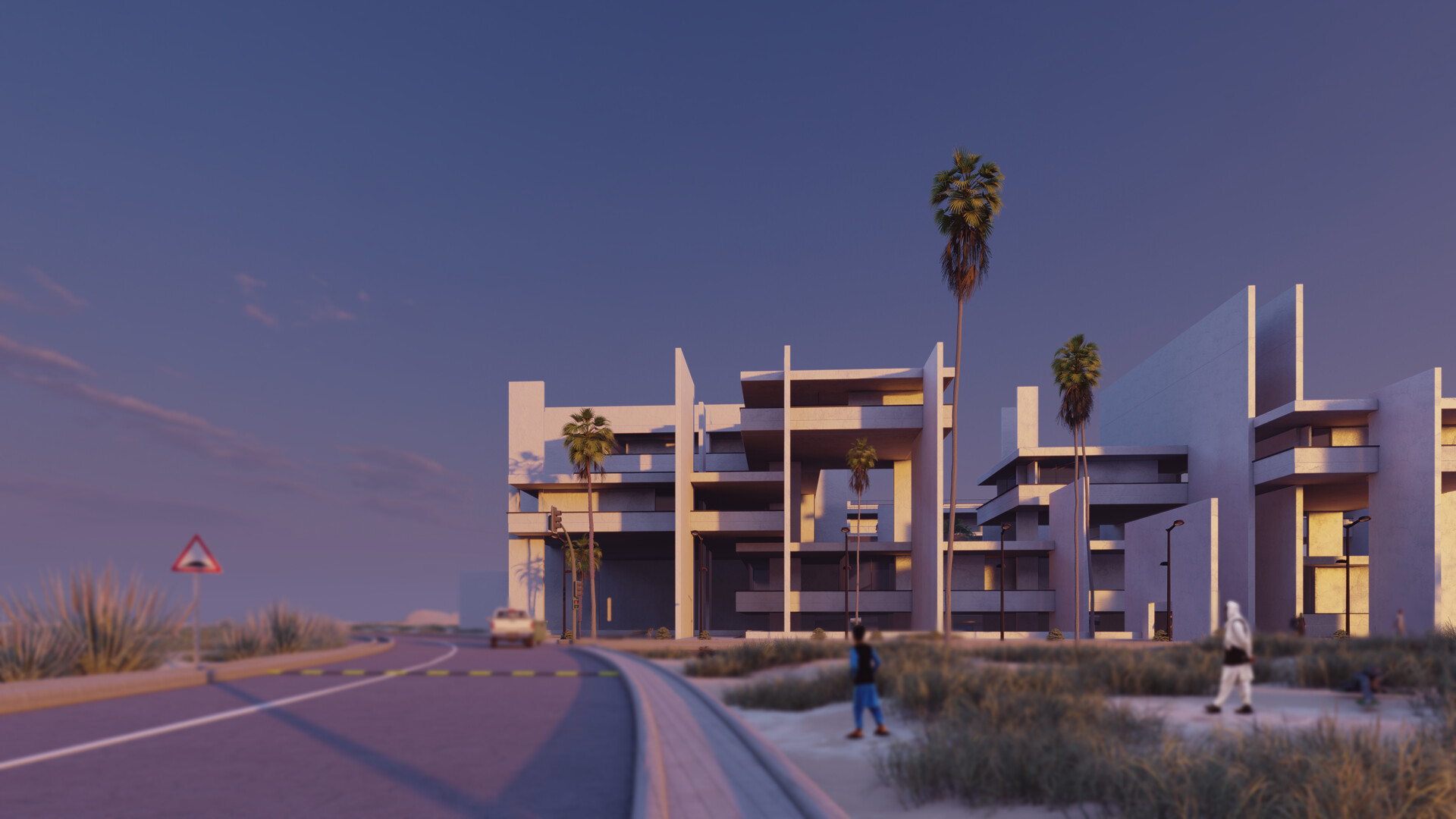
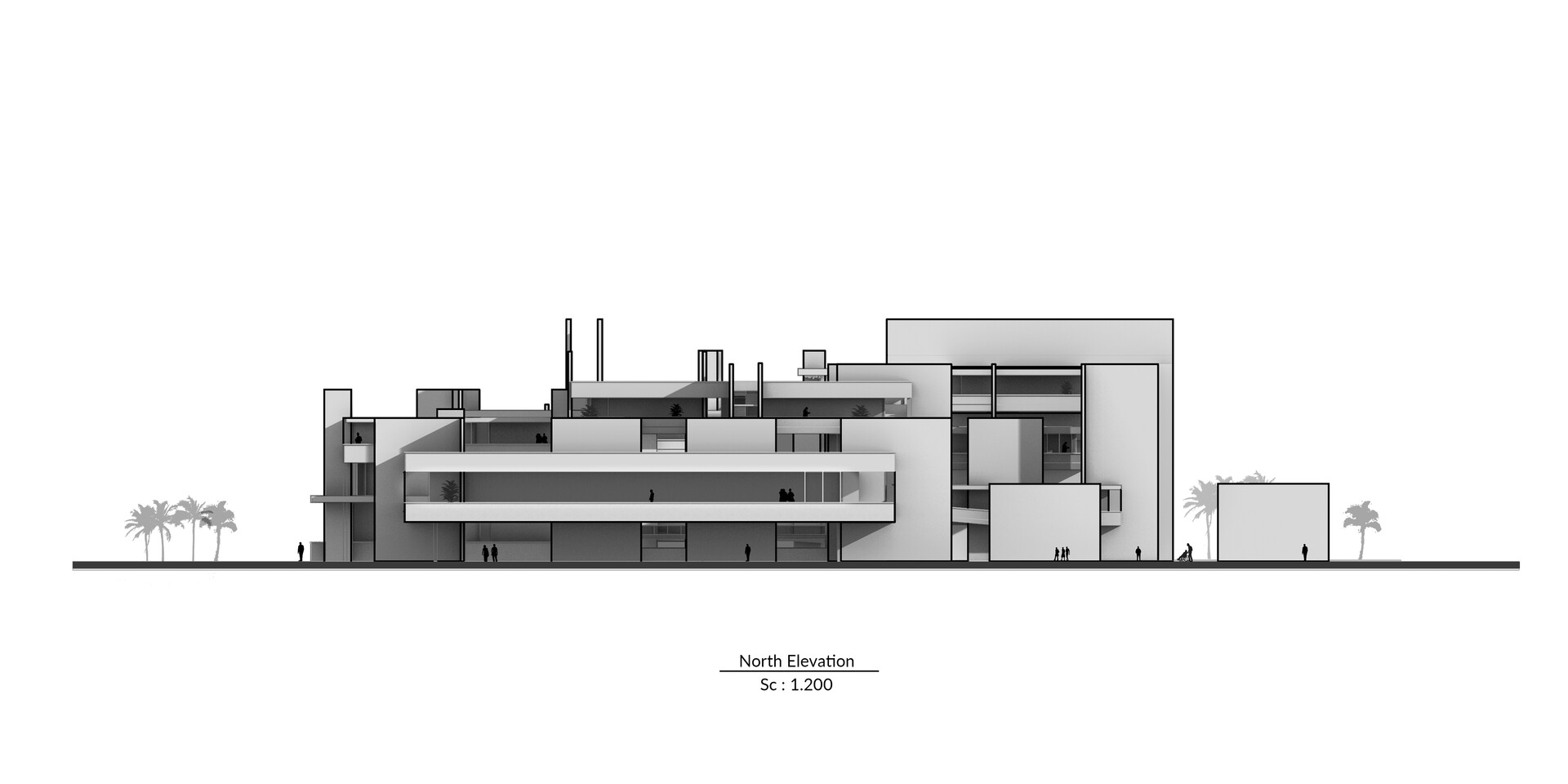
In the Persian gulf’s border architecture, “Eyvān” is introduced as a semi-open space, that not only is responsible for the air ventilation, but also as a shading element. It is the largest in its own kind and owns no fixed position, whereof, it is not attached as an extra element to the building in contrast to the other parts of the country, and it differs itself from construction to construction. This element is created as an answer to the climate needs. But in its own future existence, it is going to turn into an inseparable part of the architecture. And in addition to its independent role, it penetrates like a fluid through sub-elements as a connector. Hence “Eyvān” in southern areas of Iran is a more intelligent element in comparison to its kinds in other parts of the country and steps beyond its predefined positions. The greatest lifetime portion of the local residents is spent at “Eyvān”, as it prepares pleasant living conditions.
Yet, how can we place this vital element, the basis of our architectural design in a way that it penetrates the design project more than ever. To be as a container for any other space. And then we observe the impact of this kind of “Eyvān” on the outside space?
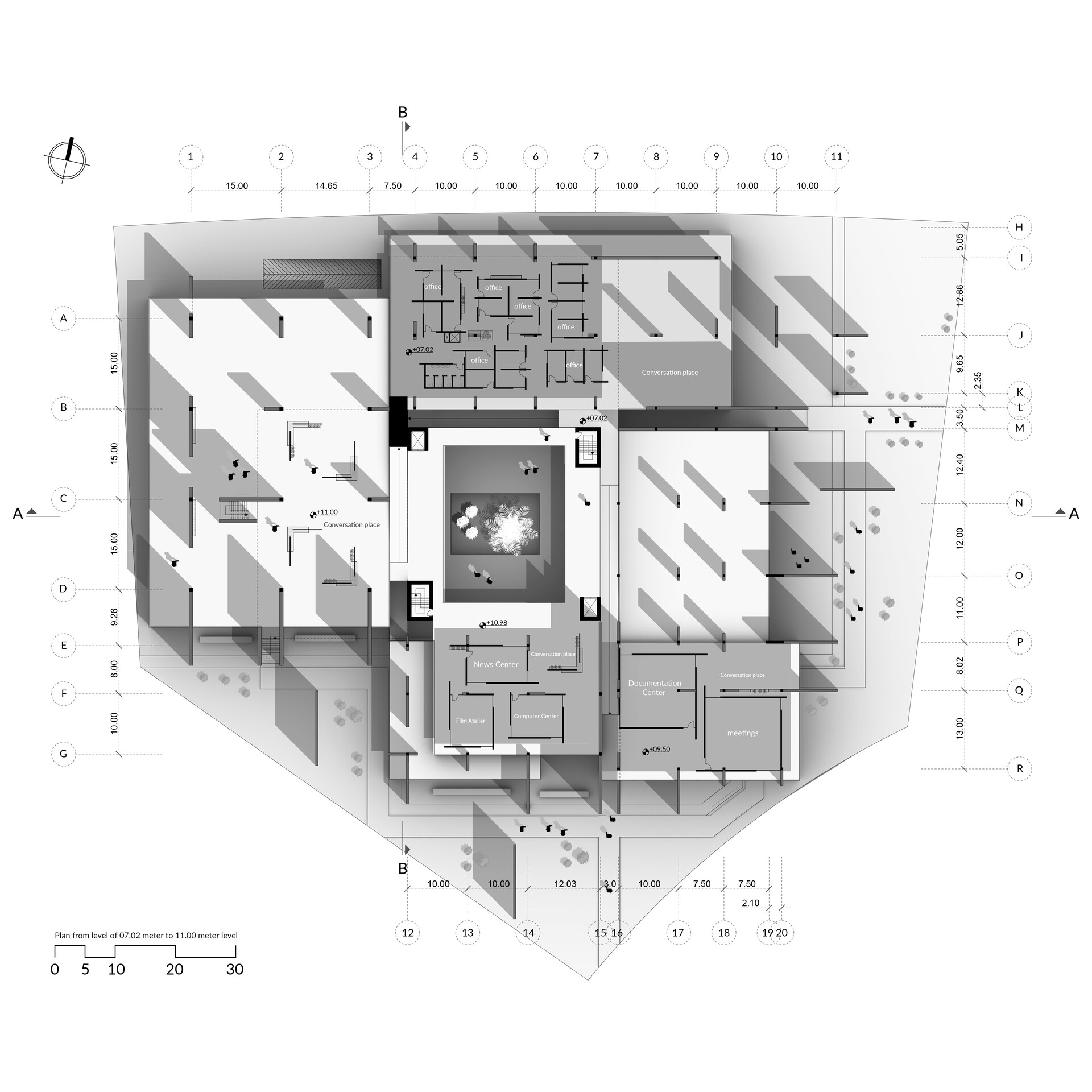
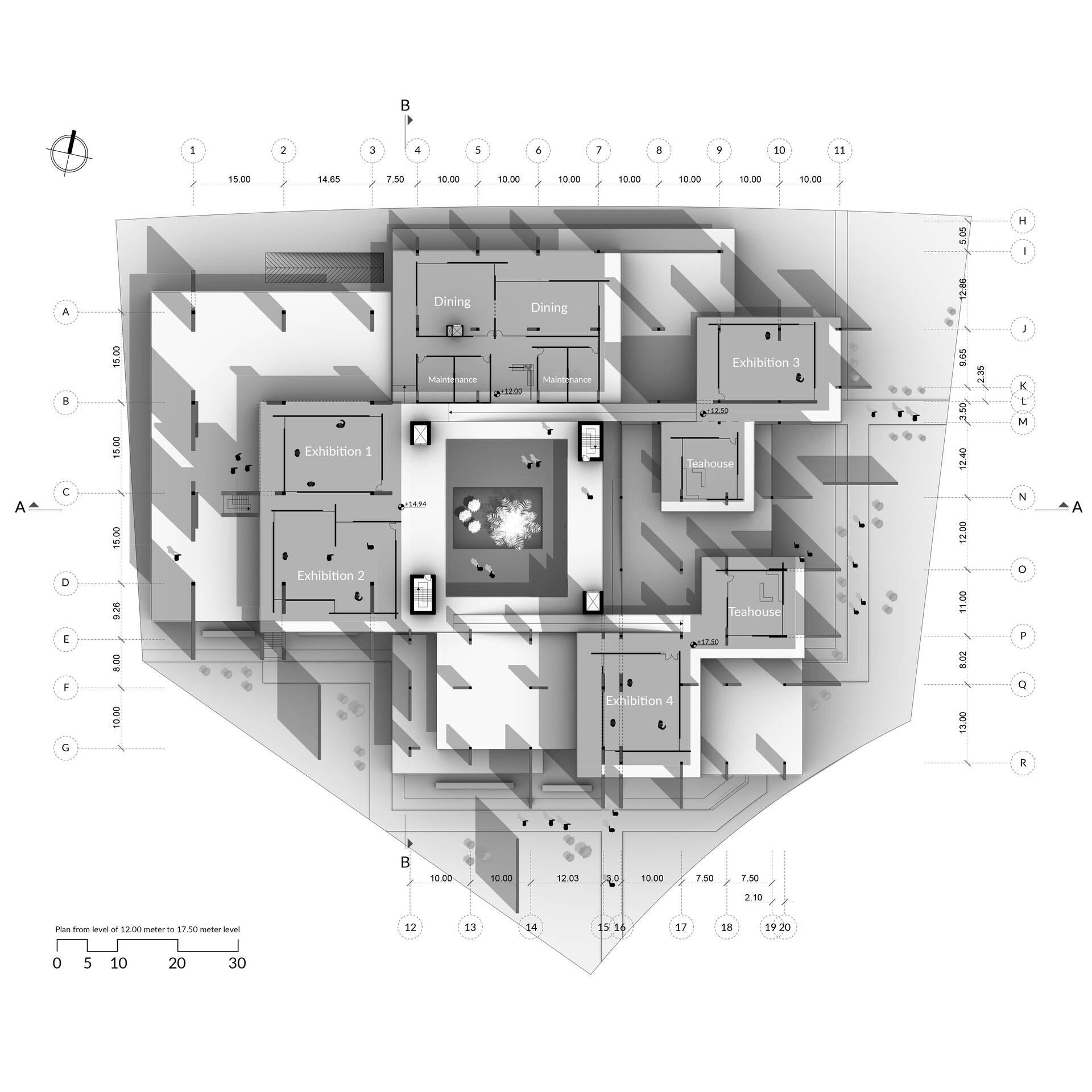
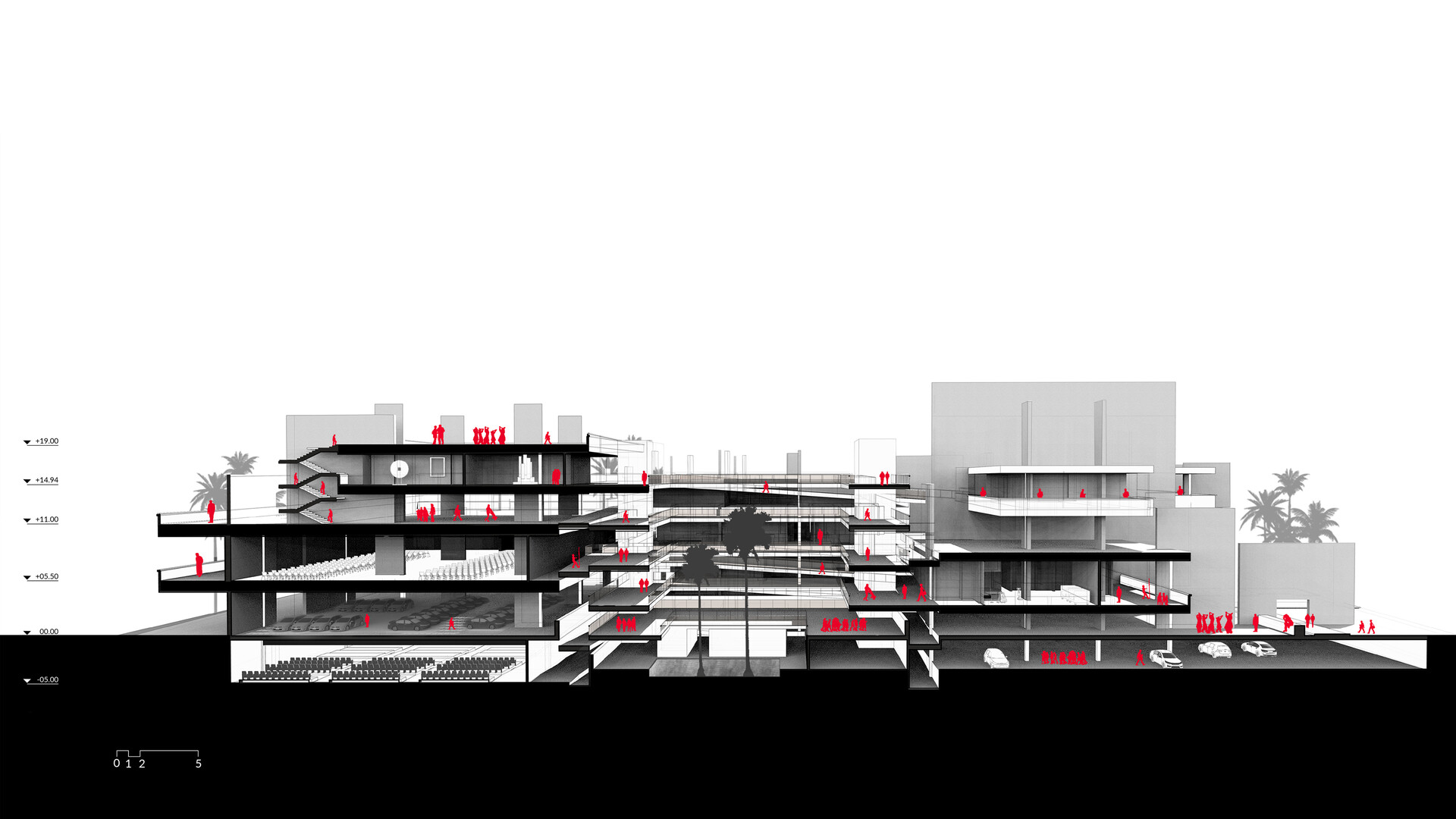
We begin from the inner spaces. An element that works usually as an attachment, is turned to a connector in Iran’s southern architecture to demonstrate a distinctive point of Eyvān. Yet, if we consider Eyvān as a container for the envelopes and then place them on their own Eyvān, in fact, Eyvān is turned to a container to accept the special programs. In another word, the space envelopes between the ceiling and the floor are surrounded by Eyvāns on each side so that it is a container for them.
The shell behind the Eyvān in the architectural form is always hollowed to locate the openings. This time, the envelope’s shell, as shown on the project diagram, slides so that the openings would be a product of walls’ placement and envelopes properties in Eyvān instead of obeying the previous form.
But what about the special placement of Eyvān? The Eyvān always appears in an intermediate position, somewhere between inside and outside. Thus, along with the realization of the project diagram, for the direct contact of the Eyvān with the outside, we used the technique of floating them so that the Eyvāns are not a barrier to each other to reach the outside. Therefore, all spaces are related to the outside space through Eyvān so that the hierarchy would be from the inside to the outside and also in 3 dimensions, from the inner space to the semi-outer space and then the outer space. Regarding their connection with each other, it should be noted that Eyvāns are a diluted part of the project plan, in other words, the envelopes are part of the project plan, which is itself a content of their Eyvāns. As we move away from the envelopes, the concentration of the program and its events decreases, and the more we distance ourselves from the envelopes, the more we find ourselves in joints. This process involves a relative range of being within the program. At the junction of the Eyvāns, which is the farthest point from the envelope and the maximum amount of common space can be felt, the diluted spaces penetrate to form a cohesive whole, in a sense, like a glue.
How can we locate the Eyvān as the outermost space in connection with the central yard, project area, and the roof? The multiplicity of the Eyvān is not limited to the semi-inner spaces, but the shadow as the trait of the Eyvān enters to the outer space. They are transformed on the border between the semi-inner space and the project area, and by adapting the horizontal Eyvān to the vertical wall, they adapt to the outer character. In this metamorphosis, the shadow is the common trait of the Eyvān and the vertical wall, with the difference that it does not include density. The shadow brings the character of the project’s form into the outside space along with the function of the Eyvān, and through this, the Eyvān is stretched in the project area, and this range of shadows affects the border between the city and the project. In fact, the city and the project are connected by the shadows of outer space and their borders are diluted. In another word, far from today's clichés, the outside of the project took place inside the project ground and will be a part of the city so that the outside contact for the Eyvān is definite and will not be affected by the neighbor constructions in the future.
The Eyvān is no longer an element between inside and outside that extends throughout the building and stretched to its former position. The interior and exterior spaces have Eyvāns, and with the penetration of the Eyvān into them, the "outside- Eyvān -inside" spectrum becomes the "outer Eyvān -semi-outer Eyvān -inner half-inner Eyvān ".